about
Too curious for my own good.Hey, glad you're stopping by! My name is Kane and I'm doing my bachelor's in Cognitive Science at the University of Tübingen.
Since June 2026 I've also been working at TIME at the medical faculty, where we develop modern teaching tools, for example involving AI or robotics. Right now I mainly help develop web apps with Django and Tailwind and integrate different LLM providers into our services.
Before that I was at the Leibniz-Institut für Wissensmedien in educational psychology, researching how LLMs can help students stay focused in class.
Personally, I see big opportunities in AI, but I also think it should be used thoughtfully, carefully and responsibly, weighing its actual costs and benefits.
Long term I see myself somewhere between medical informatics, HCI, neuroscience or computational science. What matters most to me is that my work adds social value.
When I'm not at my desk, I'm probably at the gym, doing calisthenics, training for triathlon (very much as an amateur) or bouldering.
I read a lot (mostly sci-fi and fantasy, but also novels and non-fiction), draw, photograph birds and recently gave sewing a try, which is going... okay.
On the side I'm trying my hand at French, Italian, Japanese and Chinese, the last two especially more badly than well. In general I like to start more things than I actually have time for.
interests
Things I think about way too much.Medicine & Neuro
spike raster
I find the complexity of life in general, and especially of the human body and brain, really fascinating. How, for example, do a few billion nerve cells give rise to our subjective experiences and the sense of a coherent “I”? What can we do when something in our body gets out of balance? And to what extent could technological progress offer new impulses and solutions there (e.g. pacemakers)?
Maths & Dynamical Systems
lorenz attractor · σ=10 ρ=28
For me, maths isn't just a tool, but an alternative way of looking at the world in general. From the very small to the very large, almost everything can be described by a formula. What interests me most here is dynamical systems, and I'd love to dig into them a lot more.
Training
heart rate
Gym, calisthenics, triathlon, climbing: training is my favourite self-experiment on the connection between body and mind. After a long day, few things help me as much as a run through the forest or lifting some heavy weights. Of course I also pay attention to the data behind it: how does a hard session change my focus the next day? What actually helps with recovery?
Languages
de · en · fr · it · ja · zh
I don't learn languages because I love grammar so much, but because every new language makes you think a little differently and suddenly lets you talk to completely different people. Every language opens a door into a whole other world, with new books, cultures and beautiful cities. Among them, for example, Paris, Tokyo, Singapore (briefly my second home), Shenzhen and Budapest.
projects
Things I've been building.Web apps with Django and Tailwind for TIME, the teaching institute of the Tübingen medical faculty. Also part of the team behind a chat app for medical students that connects to LLM providers (AI language models from different companies).
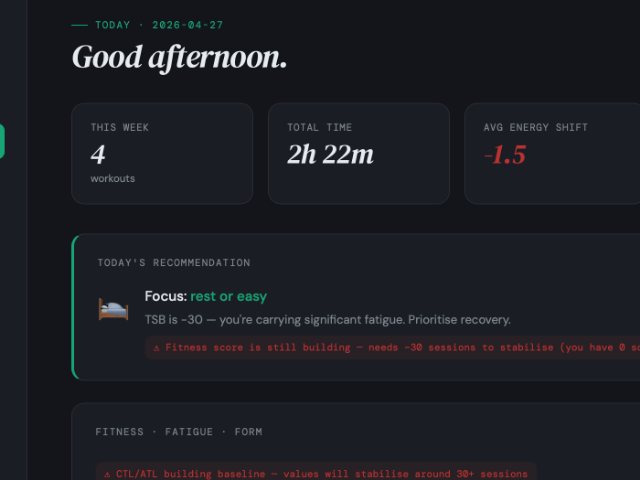
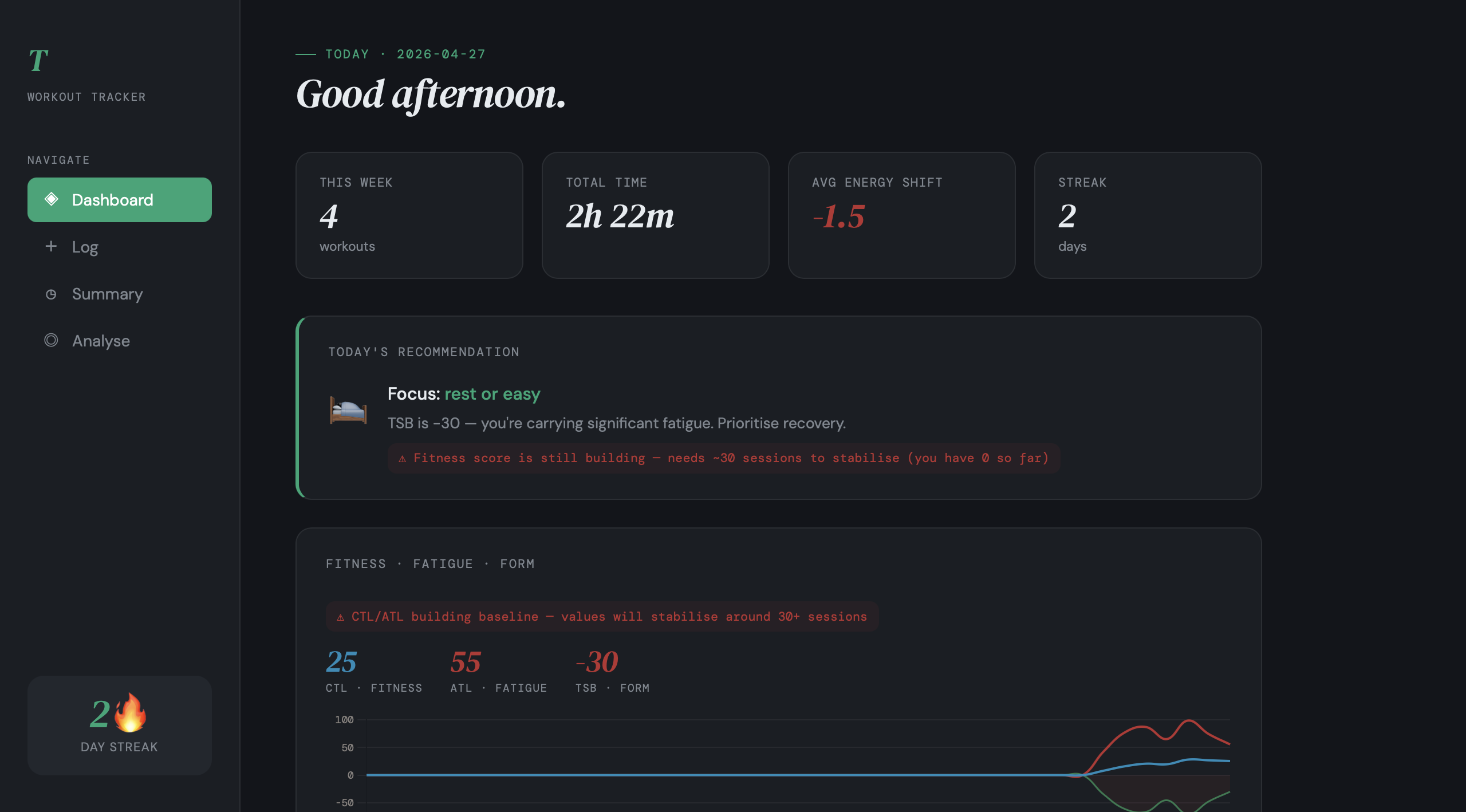
Python web app (Flask) that calculates training load from logged workouts. Alongside, it records how each session felt, meaning energy, soreness and motivation.
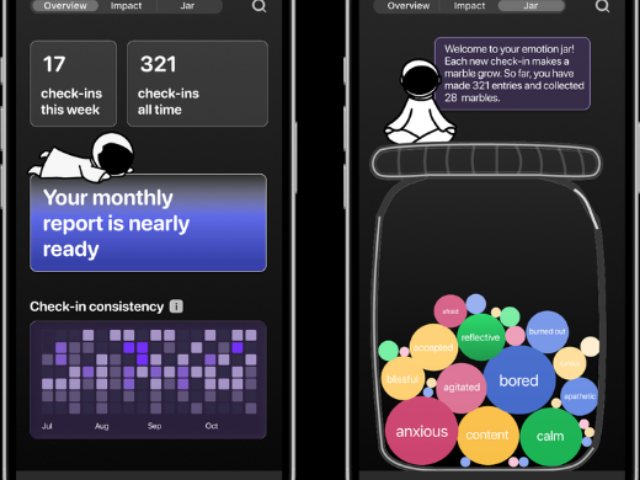
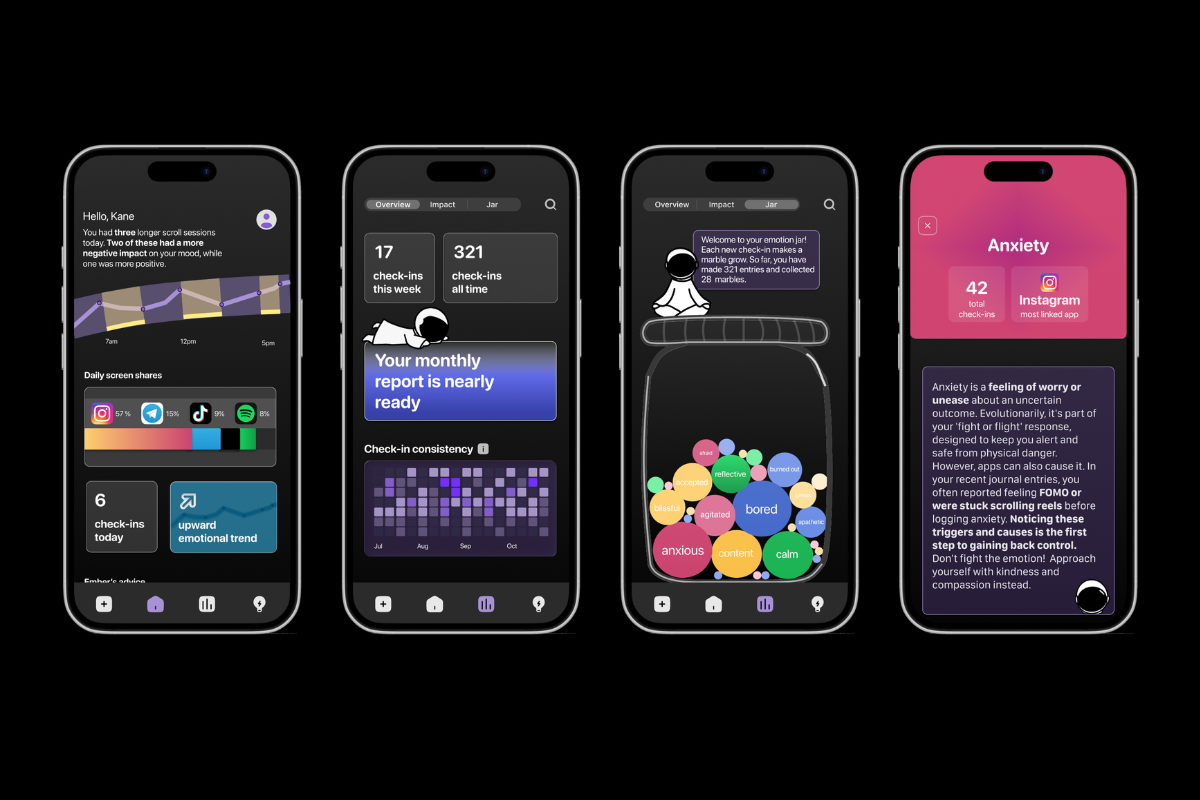
Solo UX project during my exchange semester at NUS Singapore. App concept that shows young adults how their screen time relates to their mood.
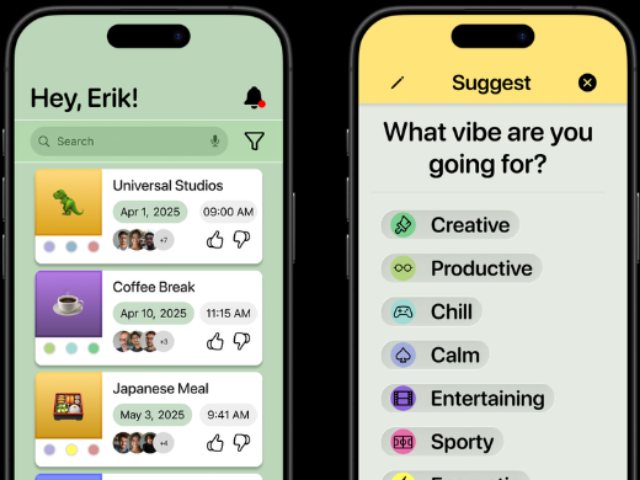
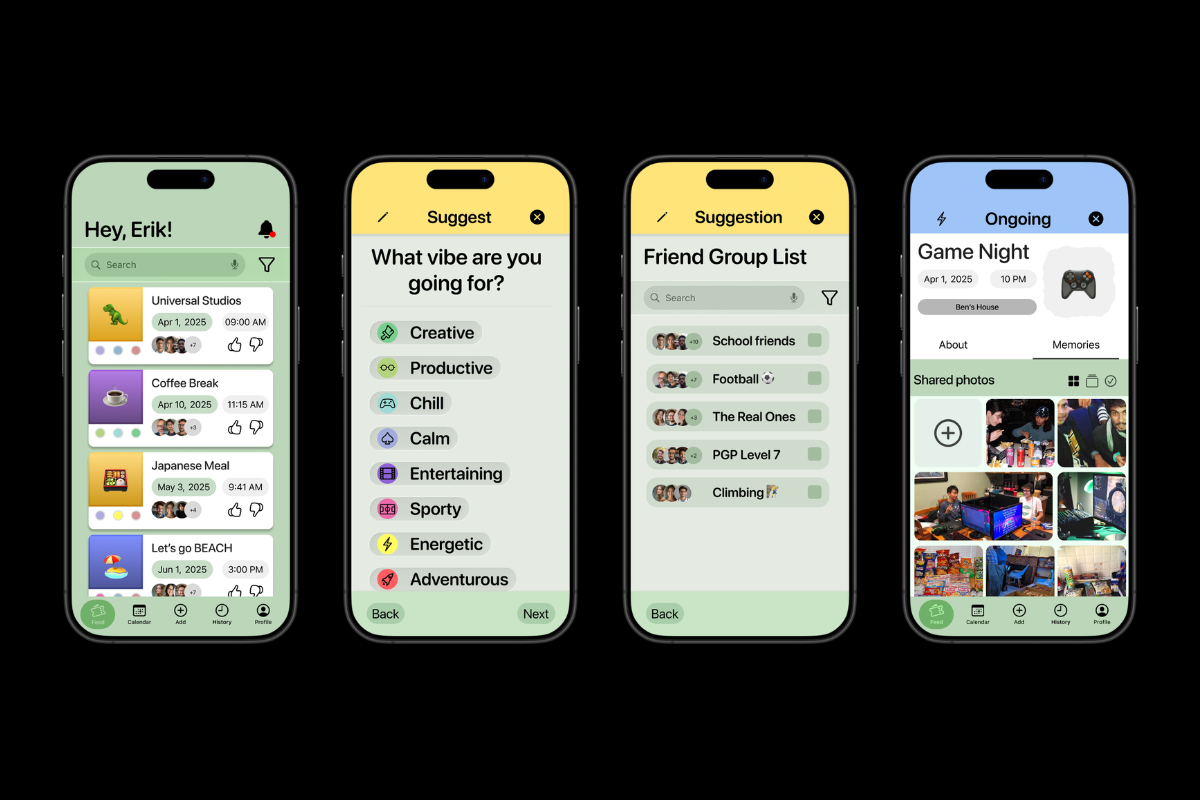
UX project in a team of four during my exchange semester at NUS Singapore. App concept that lets friend groups plan meetups, vote on who's free when, and collect memories afterwards.
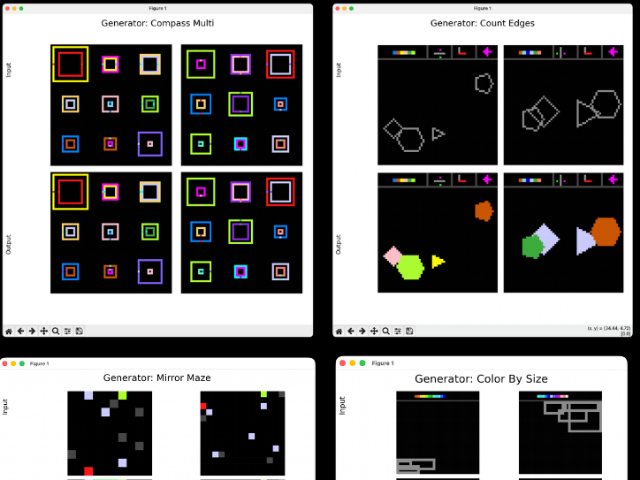
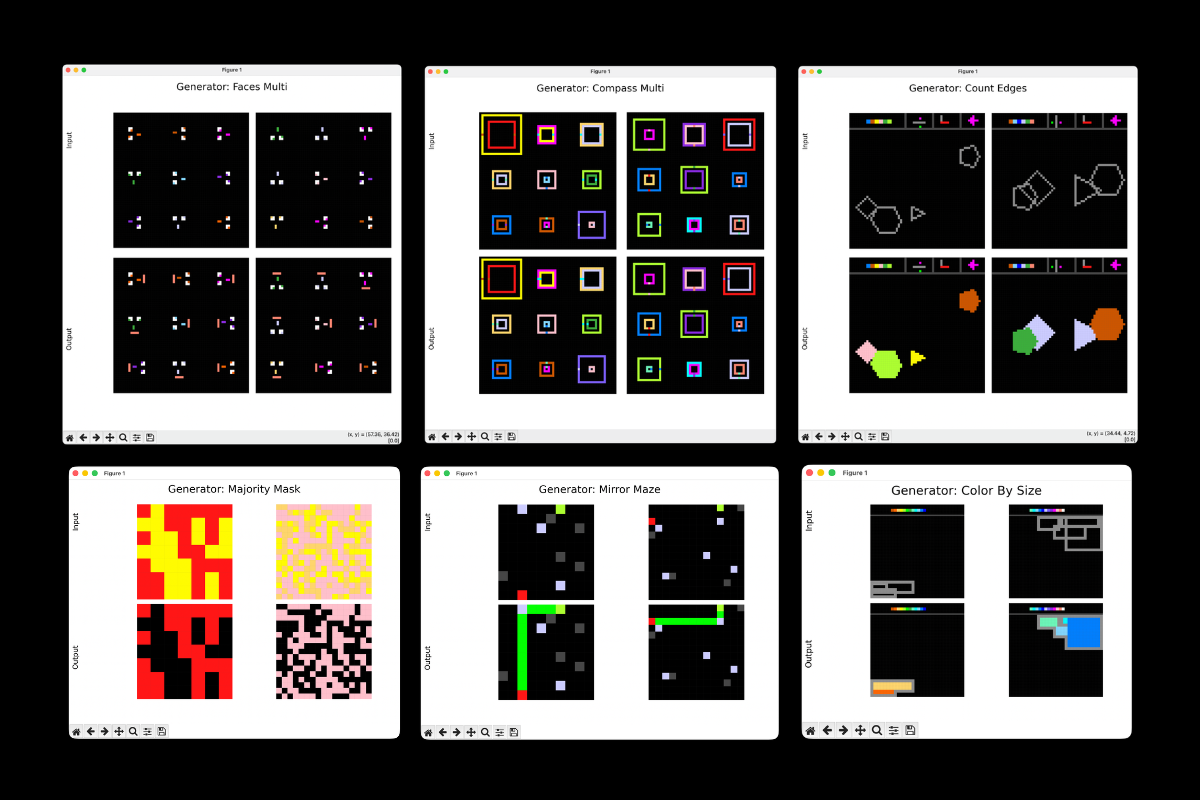
Group project at Uni Tübingen on ARC-AGI, an AI test made of visual puzzles that are easy for humans and hard for AI. My part was 7 puzzle generators and a tool that turns existing puzzles into harder variants.
New projects will show up here once there's something to show.
Web Projects @ TIME
Since mid-June 2026 I've been working at TIME, the Tübingen Institute for Medical Education at the medical faculty. I build and maintain web apps there with Django and Tailwind. I'm also part of the team behind a chat app for med students that connects to several different LLM providers. Can't show much of it yet, but it's honestly really fun to work on something that's meant for real medical teaching.
- Screenshots and more details once things are public
Workout & Load Tracker
Every training app I tried tracks numbers but completely ignores how a workout actually felt. So I built my own. The app calculates training load from the workouts, once long-term over several weeks (CTL), once short-term over the last few days (ATL), and the difference between the two (TSB), which roughly shows how recovered you are. These numbers sit right next to how I felt, meaning energy, soreness and motivation. That gives me a more complete picture of what different kinds of training do to me, and lets me try out which visualisations actually help. So far the app can do the following:
- Rolling load calculations (CTL/ATL/TSB) based on user-inputted workouts
- Subjective workout impact ratings (energy, soreness, motivation)
- Muscle soreness tracking by body area
- Data visualizations linking training load to subjective impact, featuring interactive line charts and a radar chart
- Recommendations based on training load and subjective impact
- Overtraining warning
- Automatic weather integration using a free API
- A progress and PR section to keep track of achievements
Coming soon:
- More detailed goal tracking and export options
- LLM-based insights and recommendations based on recent training patterns and current goals
- More in-depth sleep and energy correlation, as well as recovery method tracking
- Perhaps in the long run, a responsive mobile interface using React Native
 Complete · 2025
Ember · Digital Wellbeing App
A solo UX project from my exchange semester at NUS Singapore. Ember is an app concept that helps young adults understand how their screen time actually makes them feel. The app doesn't block anything or make you feel guilty. It just shows you, honestly and kindly, what your patterns are.
- User research via Reddit netnography, peer interviews, and competitor analysis of 8 existing apps
- Three core features. You log your mood along with the situation, see in charts which apps go along with which mood, and get non-judgmental takes from an AI.
- Lo-fi and hi-fi Figma prototypes with a dark design as the default and a hand-drawn mascot character
- Full UCD design-thinking process: empathise, define, ideate, prototype, test
View Portfolio ↗View Prototype ↗
 Complete · 2025
Frendzy · Social Event Planner
A UX project with a team of four from my exchange semester at NUS Singapore. The idea behind it: in lots of group chats someone says "we should do something", but it rarely happens. So in Frendzy you can suggest plans, poll who's free, see who's coming, and keep the memories in one place afterwards.
- Mixed-methods research: 4 semi-structured interviews, 29 survey responses, and competitor analysis of 10 apps
- User personas, affinity diagrams, journey maps, and 24 functional requirements derived from the problems people named in the interviews and survey
- Lo-fi prototype in Balsamiq, hi-fi prototype in Figma with full interactive flows
- Usability evaluation and think-aloud testing with iterative design improvements
View Portfolio ↗View Prototype ↗
 Complete · 2025
ARC-AGI Puzzle Generator
A group coding project at Uni Tübingen extending the Abstraction and Reasoning Corpus (ARC-AGI), a benchmark for general intelligence made of visual puzzles that feel obvious to humans but are surprisingly hard for AI. Our team added new puzzle generators, meaning programs that automatically create new puzzles following a rule. I wrote 7 of them from scratch and built a tool that tiles existing puzzles to make them harder.
- Multiplication tool: takes any existing ARC puzzle and tiles it to create harder variants, preserving the original transformation rule
- Mirror Maze: laser pathfinding puzzle with reflective mirrors and obstacles
- Face Completion: draw a proto-face (eyes, nose) and output the completed version with a mouth, with random rotation
- Majority Mask: identify the dominant colour in a multi-colour grid and isolate it
- Compass: two concentric rings with pips, rotate the inner pip to align with the outer
- Count Edges / Color By Size: polygon and rectangle puzzles with a reusable hint bar like in ARC-AGI-2. The bar gives extra hints through symbols, without which the puzzle can't be solved, and each slot can be adjusted with a colour wheel and its own settings
Scroll to walk through ↓
to the lab!
The lab: this is where I build small, interactive experiments about things that interest me.
lab
Small experiments.This is where I try my hand at all kinds of topics, from cognitive science to history. Since I can't always keep every piece of information up to date, please use it for entertainment only! Other than that, have fun with the interactive experiments.
Press NEXT on the projector for the next slide, click the picture on the wall to open it.
Scroll to walk back ↓
real world.
Next up: my CV.
cv
Experience & Educationeducation
- 2023 – nowcurrentB.Sc. Cognitive ScienceUniversity of Tübingen
Exchange semester at NUS Singapore (Interaction Design). Focus on neuromodulation & neuroplasticity, ML / information theory, and HCI.
- 2014 – 2022AbiturGoethe-Gymnasium Karlsruhe
Advanced courses in Maths, English (award) and Physics. DEAR EU #ClimateOfChange debate 2021.
experience
- Jun 2026 – nowcurrentStudent Assistant · Web DevelopmentTIME · Tübingen Institute for Medical Education
Building and maintaining web apps with Django and Tailwind CSS. Helping develop a chat app for medical students with multiple LLM providers integrated.
- 2024 – Jul 2026Research AssistantLeibniz-Institut für Wissensmedien (IWM)
Educational psychology research on AI in education: study design, data analysis in R, literature reviews, and building LLM pipelines to explore how AI can help students stay engaged.
- 2022 – 2023BundesfreiwilligendienstHeimstiftung Karlsruhe
Supported kids with special educational needs in a day-care group: daily routines, learning and conflict resolution. Also ran my own projects.
- 2022Lab AssistantUnisensor Sensorsysteme GmbH
Spectral analysis of plastic samples to improve automated recycling classification systems.
languages
- Germannative
- EnglishC2
- FrenchB2
- ItalianB1–B2
- JapaneseN5
- ChineseHSK 1–2
Bars roughly by CEFR: A1 to C2, Japanese and Chinese by JLPT and HSK.
programming
- Python
- Django
- Flask
- JavaScript
- HTML/CSS
- Tailwind CSS
- SQL
- R
- Java
design
- Figma
- Balsamiq
- UX / UI
contact
Feel free to get in touch.Got an idea, a project, a book recommendation or just feel like chatting? Feel free to write me, I'm always up for a good conversation. I don't bite :)